Showing posts with label Washington Post. Show all posts

Wednesday, November 11, 2009

WP: Wale opens a panderer's box


Wale Ovechkin is still new to some people. Here is the Post's review of his new album, Attention Deficit. I'm thinking that I need to write a review, but I've been playing these songs for months now, so listening to a concise group of them is difficult.

WP:


Hip-hop isn't dead -- it's just going through a monumental identity crisis.

Jay-Z clings to his credibility while Miley Cyrus gives him a shout-out on her latest single. Kanye West follows an awards show outburst with a blog apology that feels both petulant and contrite. Lil Wayne tells Katie Couric he's a gangster, then takes her bowling.

If hip-hop -- once our most radical, rebellious popform -- is finally congealing into the snoozy status quo, how can today's rappers feel anything but conflicted?

The genre's latest ball of contradictions comes bouncing out of Washington, D.C. His name is Wale, and after a two-year slog through the record industry's broken-down hype machine, his major-label debut "Attention Deficit," finally arrives Tuesday. It's a stellar offering from a wildly gifted rapper, but almost predictably, Wale's feelings are mixed.

"I won't rest till I'm given my respect," he proclaims on "Triumph," as if fame is something he deserves.

"Am I doing this for them or me?" he second-guesses on "Contemplate," as if fame is something he dreads.

And back and forth it goes, with the rapper's sticky, dexterous flow holding the proceedings together like so much rubber cement.

For proof of Wale's lyrical acrobatics, look no further than "Pretty Girls," where the rapper's best pickup line involves two bottles of champagne, a football joke and a healthy credit rating: "What you sippin' on? It's no problem/Black and gold bottles like I'm pro-New Orleans/But shorty, I'm far from a Saint/But I got two AmExes that look the same way."

This is some masterful wordplay -- with an emphasis on play -- and it makes for the album's most dazzling cut. The song's thundering, go-go-inflected track helps, too. Production duo Best Kept Secret built it around a sample from local stalwarts Backyard Band and it sounds like a house party crumbling in an earthquake. How it will fare on national radio is anyone's guess, but for locals fluent in go-go, "Pretty Girls" is a thriller.

Wale has a fantastic ear for beats, though you wouldn't know it after hearing "Attention Deficit" in its entirety. There's some real dreck from producers Mark Ronson ("90210") and the Neptunes ("Let It Loose"). Wale is either adopting the please-all-audiences model West popularized, or his label's invisible hand is fussing with the dials. (In a delicious stroke of irony, Interscope reportedly zapped a song from the track list titled "Artistic Integrity.")

Sometimes pandering to the masses isn't such a bad idea. The album's lead single "Chillin," is a club-friendly romper with a chorus co-hosted by ascendant weirdo Lady Gaga. Purists balked at the collaboration when it hit the blogosphere last spring, dismissing it as too left field. Had M.I.A. or Rihanna belted that same exact hook, this tune would still be taking hourly victory laps across the airwaves. And there's a precedent here, too. Does anyone remember back in 1985, when local go-go icons E.U. crossed paths with pop-eccentric-turned-gay-culture-icon Grace Jones?

By the end of his 14-track, big-league debut, Wale sounds nothing less than harried, hustling to please the gods of Billboard, radio, MTV, the blogosphere and his home town. But with "Mirrors" he tries to brush those extraneous pressures off his shoulders with his most poignant line: "What the fans can't see, that mirror gonna notice."

What a concept: a rapper who answers to an audience of one.

Monday, November 2, 2009

WP: Climate bill faces hurdles in Senate

Senate needs to take some action.

Washington Post:

The climate-change bill that has been moving slowly through the Senate will face a stark political reality when it emerges for committee debate on Tuesday: With Democrats deeply divided on the issue, unless some Republican lawmakers risk the backlash for signing on to the legislation, there is almost no hope for passage.

Like the measure adopted by the House, the legislation favors a cap-and-trade system that would issue permits for greenhouse gas emissions, gradually lower the amount of emissions allowed, and let companies buy and sell permits to meet their needs -- all without adding to the federal deficit, according to projections. But key Republicans are making their opposition clear, even as Sen. John F. Kerry (D-Mass.) has enlisted Sen. Lindsey O. Graham (S.C.) as his most visible GOP ally in gathering support for the bill.

Sen. George V. Voinovich (Ohio), a member of the Environment and Public Works Committee who was initially seen as one of the few Republicans who might consider backing the majority, is helping lead the opposition.

"Why are we trying to jam down this legislation now?" he asked during a hearing last week. "Wouldn't it be smarter to take our time and do it right?"

He wrote Environmental Protection Agency Administrator Lisa P. Jackson twice this summer to ask for a more detailed economic analysis of the House-passed climate legislation, and he has joined the other six Republicans on the committee in boycotting the climate bill's markup, scheduled for Tuesday.

The measure has deeply divided Democrats. With states in the Midwest, South and Rocky Mountain West dependent on fossil fuels for energy, many senators are worried about the legislation's impact on industry and consumers.

"I think at the end of the day, the people who turn the switch on at home will be disadvantaged," Sen. Ben Nelson (D-Neb.) told CNBC on Friday, explaining why he did not think the bill Kerry had sponsored along with Environment and Public Works Chairman Barbara Boxer (D-Calif.) could pass.

So Democratic leaders, with the support of the Obama administration, are trying to sway at least half a dozen Republicans by offering amendments to speed along their top priority: building nuclear power plants.

Graham has suggested provisions on nuclear power and offshore oil drilling that could win his support for a cap-and-trade climate bill. Sen. Joseph I. Lieberman (I-Conn.) has established a bipartisan working group of 17 Senate offices that is close to producing a detailed amendment aimed at hurrying the construction of U.S. nuclear reactors.

But it remains unclear whether that approach will hold currency in the current era of political polarization. One of the top Republicans whom Democrats hope to recruit in this effort -- Sen. Lisa Murkowski (Alaska), whom Graham and Kerry recently buttonholed on the Senate floor -- has voiced skepticism about the legislation.

"A tepid nuclear title isn't enough to get her to support a bad climate bill," said Robert Dillon, a spokesman for Murkowski.

Graham and Kerry are set to meet Wednesday with Energy Secretary Steven Chu, as well as with Obama's top climate adviser, Carol M. Browner, and Interior Secretary Ken Salazar to discuss a possible compromise. They are also setting up meetings with colleagues on the issue.

"There is nowhere near 60 votes for a nuclear power bill on its own. There's not 60 votes for a cap-and-trade bill as it's currently constructed," Graham said in an interview. He said combining the two measures is "the only way you'll get to 60 votes."

It is what Sierra Club Executive Director Carl Pope calls "the old formula for bipartisanship."

"They would agree on a goal, they would not agree exactly on the means to a goal, and they'd come up with a legislative solution that takes elements from both sides," he said.

And Graham, for his part, has become a lightning rod for controversy back home. On Oct. 22, the American Energy Alliance, an advocacy group funded in part by energy companies, launched a radio, TV and online advertising campaign in South Carolina that has cost "close to $300,000" so far, according to the group's spokesman, Patrick Creighton.

Featuring a Halloween theme, the TV commercial warns of "some scary stories coming out of Washington" and says, "The latest is Senator Lindsey Graham's support for a national energy tax called cap-and-trade."

Creighton said the group questions why Graham says a deal will help offshore drilling, which Congress has already allowed.

Groups backing the climate bill came to Graham's defense last week. They aired radio and television ads that featured state Sen. John Courson, a conservative Republican who became concerned about global warming after witnessing the decline of polar bears in Churchill, Manitoba.

"Out-of-state interests are attacking our Senator Lindsey Graham," Courson says in an ad underwritten by Republicans for Environmental Protection, "because he's backing an energy plan that produces more power in America."

Sen. Tom Udall (D-N.M.), a member of the Environment and Public Works Committee, said he is optimistic that the parties can reach an accord because Americans are not divided along party lines on global warming. "Is there bipartisanship in the country? I think clearly there is," he said.

State lawmakers who came to advise the White House last week on climate saw a different picture. "We looked for any Republican, in any state legislature in the country, who supported a bill," recalled Minnesota state Rep. Jeremy Kalin. "We found not a one."

Sunday, September 27, 2009

WP: Climate-Change Study Cites Role of Ancient Farming

WP:

Has climate change been around as long as the pyramids?

It is an odd-sounding idea, because the problem is usually assumed to be a modern one, the product of a world created by the Industrial Revolution and powered by high-polluting fossil fuels.

But a professor emeritus at the University of Virginia has suggested that people began altering the climate thousands of years ago, as primitive farmers burned forests and built methane-bubbling rice paddies. The practices produced enough greenhouse gases, he says, to warm the world by a degree or more.

Other scientists, however, have said the idea is deeply flawed and might be used to dampen modern alarms over climate change.

Understanding the debate requires a tour through polar ice sheets, the inner workings of the carbon molecule, the farming habits of 5,000-year-old Europeans and trapped air bubbles more ancient than Rome.

"The greenhouse gases went up, and they should have gone down" many thousands of years ago, said U-Va.'s William Ruddiman. "Why did that happen?"

His answer is based on circumstantial evidence. Ruddiman said two events in world history -- an apparent shift in the composition of the atmosphere and the first explosion of human agriculture -- took place at nearly the same time.

"Greenhouse gases do something they never did before," Ruddiman said. "And humans do something the Earth [had] never seen before."

Ruddiman first presented his idea of ancient climate change in 2003. But he returned to the subject last month, in a paper intended to rebut one major criticism -- that there were not enough people on the planet thousands of years ago for their emissions to make a difference.

Ruddiman's response: yes, there were. And in those days, one farmer was as destructive as multiple farmers are today.

He and Erle Ellis, a professor at the University of Maryland Baltimore County, wrote in the journal Quaternary Science Reviews that early farmers did not have modern fertilizer or factory-made tools, but they did have a lot of land. They would clear an area by cutting or burning it, farm the ground until it was nearly barren and move on.

"Those tens of millions [of people] had the impact of hundreds of millions, because per person, they had 10 times the impact," Ruddiman said. "And that's enough to start the curve turning around."

The assertion is the heart of Ruddiman's arguments -- and his critics' complaints. Where he sees human impact on the curving plot of global temperatures, they see a misunderstanding of what nature was doing at the time.

"I think it's a bunch of bosh," said Wallace Broecker, a professor at Columbia University. Broecker said he worried that the idea of pre-modern people as carbon emitters would turn into an argument that the modern world need not worry so much about its own pollution. "I get really upset with him, because people who oppose global warming [legislation] can use this as some dodge."

The science of the debate begins with the idea that Earth has natural freeze-and-thaw cycles, driven heavily by changes in its orbit. The planet is in a warm "interglacial" period, which began 10,000 years ago with the end of the last Ice Age.

Beginning more than 8,000 years ago, Ruddiman said, things should have started slowly cooling off again.

But for some reason, he said, the cooling was less than expected.

Ruddiman thinks the explanation is revealed in long "cores" taken from polar ice, in which tiny bubbles of air have been trapped for thousands of years. He has examined the bubbles and found that about 5,000 years ago, they began showing unexpected increases in carbon dioxide and methane.

His theory is that the gases were pollutants, produced by civilizations on several continents that were picking up the settled life of farmers.

The carbon dioxide, Ruddiman said, could have come from smoke, from forests burned to create farmland on several continents. It could have seeped out of felled trees as they rotted. The methane, a byproduct of decay in swampy water, could have come from areas of Asia newly flooded to grow rice. It also might have been expelled by livestock.

In the atmosphere, Ruddiman says, the gases trap solar heat that might otherwise have bounced back out to space. They were greenhouse gases, the same as now.

His theory is that the trapped heat, amplified by natural feedback cycles, may have kept Earth's temperature steady, when it otherwise might have slipped back toward an ice age. That effect lasted until modern times, he said: temperatures might be more than one degree Fahrenheit higher than they would have been.

The early farmers "did not . . . change the actual climate," said Ellis, Ruddiman's collaborator on the recent paper. "They kept the climate from changing."

But Ruddiman's critics say he is wrong to see human impact here: nature was in control all along.

"I think it's more or less a hypothesis without any evidence to support [it]," said Ken Caldeira, a researcher at the Carnegie Institution for Science in California.

In fact, critics of Ruddiman say, there is strong scientific evidence to prove him wrong. They say that recent studies of very deep ice samples show that ice ages did not always come and go on the same schedule. That could throw off Ruddiman's calculations for when the next round of cooling was supposed to start.

And there is evidence, they say, inside the carbon atoms themselves. Carbon atoms that come from plants can be tracked, by looking at the number of neutrons in their nucleus. If Ruddiman was right, and ancient farmers burned enough plants to change the climate, then the amount of carbon from plants in those bubbles would rise significantly.

But, they say, it did not.

"The general feeling [about Ruddiman's theories] in the community is 'Interesting -- but probably not,' " said Gavin Schmidt, a climate researcher at NASA's Goddard Institute for Space Studies in New York.

Ruddiman, though, says he has science-based counterarguments on both points.

One thing all sides agree on: the suggestion that early farmers were causing climate change is not a sign that the modern world can stop worrying about it.

Ruddiman said there is still a need to cap and reduce greenhouse gases, since modern smokestacks and tailpipes are pumping them out at a level that dwarfs anything from earlier eras.

Friday, September 18, 2009

WP - Eugene Robinson: The Favor Jimmy Carter Did Us All


Everyone was thinking exactly this. I've said it repeatedly. It took an old white man to say it for anyone to take any notice. It's very very true.

WP:
What I wrote last year about candidate Barack Obama -- that to win he had to be seen as "the least-aggrieved black man in America" -- may be even more relevant now. To lead this diverse and fractious nation effectively, the president has to negotiate racial issues with delicacy, caution and tact. He has to give even his most vocal critics the benefit of the doubt.

But I don't. So I can say in plain language that Jimmy Carter was right in essence, but wrong in degree. It seems clear to me that some -- but not "an overwhelming portion," as Carter claimed -- of the "intensely demonstrated animosity" toward Obama is indeed "based on the fact that he is a black man."

Obama disagrees. "The president does not believe that criticism comes based on the color of his skin," White House press secretary Robert Gibbs said Wednesday. Obama is the most garrulous president in many years, but when a reporter asked him about Carter's remarks, he had not a word to say.

Nor do many other leading Democrats -- outside of the Congressional Black Caucus -- want to touch this explosive subject. As a matter of political strategy, I don't blame them. The minute you observe that some of Obama's critics seem to be motivated by race, the critics howl that they're all being smeared as "racists" simply because they disagree with Obama's policies. This is not true.

Of course it's possible to reject Obama's policies and philosophy without being racist. But there's a particularly nasty edge to the most vitriolic attacks -- a rejection not of Obama's programs but of his legitimacy as president. This denial of legitimacy is more pernicious than the abuse heaped upon George W. Bush by his critics (including me), and I can't find any explanation for it other than race.

I'm not talking about the majority of the citizens who went to town hall meetings to criticize Obama's plans for health-care reform or the majority of the "tea bag" demonstrators who complain that Obama is ushering in an era of big government. Those are, of course, legitimate points of view. Protest is part of our system. It's as American as apple pie.

I'm talking about the crazy "birthers." I'm talking about the nitwits who arrive at protest rallies bearing racially offensive caricatures -- Obama as a witch doctor, for example. I'm talking about the idiots who toss around words like "socialism" to make Obama seem alien and even dangerous -- who deny the fact that he, too, is as American as apple pie.

This whole discussion was kicked off by Rep. Joe Wilson's "You lie!" outburst during Obama's address to a joint session of Congress. As the House members who voted to rebuke Wilson -- including seven fellow Republicans -- understand, calling the head of state a liar in such an official setting is way out of bounds. Grumbling and even booing come with the territory, but a flat accusation of mendacity is an impermissible sign of disrespect. Nobody ever called Bush a liar when he was speaking in the House chamber.

Why would Wilson think he was entitled to insult the president this way? Why would he refuse to offer a formal apology on the House floor, which would have ended the matter? I have no idea. Friends and colleagues say he is no racist, and they know the man a lot better than I do. But he does have a history.

Before he was elected to Congress, Wilson was one of a handful of South Carolina state senators to vote to keep the Confederate flag flying above the State House in Columbia. This was after a long, bitter battle over the flag had distilled the issue, at least in the minds of most South Carolinians, into a proxy fight over race: Was the state going to move forward, or would it cling to its shameful past? Most politicians in the state, including most conservatives, had decided it was time to move on. Wilson was one of the last diehards.

That, of course, was his right. But now that he has committed a singular act of disrespect toward the first African American president, it's my right to ask whether his motivation was racial.

I look forward to the day when we can look past race. But before we can do so, we need to look at race and see it clearly. Jimmy Carter did us a favor.

Tuesday, June 16, 2009

WP: East Coast May Feel Rise in Sea Levels the Most

This is close to home.

WP:
Sea levels could rise faster along the U.S. East Coast than in any other densely populated part of the world, new research shows, as changes in ice caps and ocean currents push water toward a shoreline inlaid with cities, resort boardwalks and gem-rare habitats.

Three studies this year, including one out last month, have made newly worrisome forecasts about life along the Atlantic over the next century. While the rest of the world might see seven to 23 inches of sea-level rise by 2100, the studies show this region might get that and more -- 17 to 25 inches more -- for a total increase that would submerge a beach chair.

Might.

Scientists say the information comes from computer models, which could be wrong. And the mid-Atlantic region's ample high ground means it will probably never be as vulnerable as Louisiana and Florida.

But some are already sketching a new vision for the East Coast, as a region under siege by the ocean. In the coming decades, they say, it will probably be necessary to spend heavily to defend some waterside places -- and to make hard choices about where to let the sea win.

"There will probably be some very difficult decisions that have to be made," said Rob Thieler, a scientist with the U.S. Geological Survey. "Are there places where we should simply retreat because the cost of holding the line is unacceptably high?"

On Thursday, the governors of coastal states from New York to Virginia released an agreement on Atlantic Ocean issues, including the need to prepare for sea-level rise. The governors pledged to identify places and facilities most vulnerable to high water, including port areas, parts of the power grid and other infrastructure.

Researchers say rising seas are one of the most tangible consequences of a changing climate. They rise because they are warming, expanding in volume like a highway bridge on a summer day. And they rise because they are filling up, fed by melting ice.


In the 20th century, global seas rose about 0.07 inches per year -- a steady climb up tide gauges, even as the world debated the existence and the science of climate change.

"It doesn't matter who's causing global warming. Sea-level rise is something we can measure," said Rob Young, a geosciences professor at Western Carolina University. "You can't argue that sea level isn't rising."

And it has been rising faster in the mid-Atlantic because the land here is sinking.

Understanding this phenomenon requires thinking of the Earth as an enormous balloon. Push down in one spot on the ball's surface and surrounding areas are raised up. Glaciers did this to Earth's surface during the last ice age: they pressed down on northern North America and areas to the south tilted up, like the other end of a seesaw. Today, thousands of years after the glaciers retreated, the seesaw is tipping back the other way, and the region from New York to North Carolina is falling about six inches per century.

Researchers are finding that climate change could bring new bad luck by untracking a system of ocean currents that performs the astounding feat of keeping the sea here below the average sea level.

They say it works like this: Warm water from the south Atlantic flows north along the coast, cools off and sinks. That sinking happens on such a vast scale that the Atlantic's surface is lower here, a depression in the ocean 28 inches deep. But two new studies have shown that climate change could make northern waters warmer and could dump a disruptive flood of fresh water from melting glaciers in Greenland.

"You're getting less sinking, because [fresh water] is less heavy, it doesn't sink as much. That kind of slows down this whole conveyor- belt thing," said Gerald Meehl, a scientist at the National Center for Atmospheric Research in Colorado whose study of this phenomenon came out last week.

"You'd get an additional one or two feet over this global sea-level rise" along parts of the coast, Meehl said, an effect that would be strongest in the Northeast.

Another study last month found a threat from a Texas-size ice sheet in Antarctica. If it broke off and melted, the shift of mass from pole to ocean would change both Earth's gravitational field and its rotation.

The result? Still more water would slosh to the U.S. Atlantic Coast, along with the Pacific Coast. But in this case, it would probably not happen for centuries.

Scientists concede that these predictions could be flawed or flat wrong.

Even if they are right, New York still isn't in the same danger as New Orleans. Even a yard of sea-level rise, they say, would not put any major East Coast cities underwater. But higher waters would mean bigger storm surges, a greater chance of flooding on rivers such as the Potomac or the Patapsco in Baltimore.

It could be a much bigger problem for barrier islands and marshes, which are typically just a few inches above the water. Even before the recent research forecast accelerating rise, Blackwater National Wildlife Refuge -- a rare, vast marsh on Maryland's Eastern Shore -- was predicted to become mainly open water by 2030.

So some researchers have already begun thinking about how to defend the coast. Professors at the State University of New York at Stony Brook have suggested building barriers that might pop up during big storms and seal off the city's water like a bathtub. The fishing port of New Bedford, Mass., has had such a "hurricane barrier" since the 1960s.

In the Washington region, Environmental Protection Agency official James G. Titus said, Hains Point, along the Southwest Waterfront, and K Street NW in Georgetown might have to be elevated. Sections of the waterfront Fells Point neighborhood in Baltimore might also need to be jacked up.

And, Titus said, rural areas along the water might have to be abandoned. On Maryland's Eastern Shore, for instance, rising seas could eat up large sections of marshy Dorchester County.

A more uncertain fate awaits such places as Assateague Island, a celebrated nature preserve, or the Maryland and Delaware beach resorts. They sit on barrier islands, just a few feet above the water.

"If these sea-level-rise numbers . . . come to pass, then I think it's pretty much a certainty" that these resorts would be abandoned, said Young, of Western Carolina University. "We're going to be spending so much money protecting metropolitan areas that it's hard to imagine we'd have enough left over to protect resort communities."

For now, that idea is almost too big to think about for resort-town mayors.

In Dewey Beach, Del., Mayor Dell Tush said the town had been staggered by the $12,000-per-house cost of elevating just a few homes that are too close to the water.

"The town basically has no plans, you know, for doing anything" to prepare for rising seas, Tush said. To raise all the town's houses "would be cost-prohibitive, it really would."

The threat is more tangible at Joey's Pizza and Pasta on Long Beach Island, N.J., another narrow, built-up barrier island. There, rain can bring Little Egg Harbor within a few feet of the door; a high tide and a good storm can put water in the dining room.

"You can't fight it. People say 'Sandbag the doors.' No, it comes in everywhere," said manager Tom Kowal. The restaurant makes light of its situation with a sign that says "Occasional Waterfront Dining." But Kowal said he is worried about what's coming.

"Ten inches higher than sea level right now? I'm underwater."

Friday, May 29, 2009

Eugene Robinson: A Smile to Set the GOP on Edge

My man Eugene Robinson (recent Pulitzer winner) drops another fantastic editorial in todays Washington Post. Here, he writes about Sonia Sotomayor, Obama's nominee to fill Justice Souter's seat on the Supreme Court. Regardless of who Obama had picked, the GOP and their sycophantic flock of infants would have no doubt bashed them, having "liberal activist judge" talking points ready. Sotomayor is by most educated accounts, a relatively moderate judge, with a highly distinguished career in both private and public law, and as Robinson points out, a longer career in the federal justice system than anyone else on the current Supreme Court. Of course, like the pathetic weasels that they are, Limbaugh, Coulter, and New Gingrich (amongst other squabbling old leaders of the "new" GOP) have jumped on the easiest thing they could: an out-of-context remark about being proud of her heritage and race.

What they don't understand, and what I haven't seen media explain, is that her saying that her life as a Latin-American woman WOULD make her a better judge in modern America. Granted, this is assuming that she has the educational and professional background to hold the position, but her unique perspective of being an underrepresented sex in an underrepresented minority DOES in fact provide her with a better understanding of the law. The only thing that I think would make her a more suitable candidate is if she were in fact also a lesbian. Who better to make weigh the constitutional relevance to modern legal precedence on abortion issues than a woman, who would be most directly affected by the decision? Who better to make decisions on affirmative action than someone who has lived through the subtle racism of modern professional America? Who better to decide on issues of immigration than a member of the Latin-American community (yes, I do know she was born in the Bronx, and that her parents are from Puerto Rico which is an American territory and the Latin-American community is not homogeneous)? I think it would be better if she was a lesbian, because who better to decide about whether same-sex marriage should be legal than someone who would be directly affected? All of the white-man decisions have been made, will continue to be made by the rest of the court (looking at you Clarence Thomas).

What Newt Gingrich fails to understand, is that racial pride for minorities in American is very different from racism. For white America, people can be proud of their Irish or Italian heritage, or celebrate being a southern gentleman or a California surfer, or enjoy the Jewish community which shares a common past and culture, but what has defined "white power" is hatred for everyone else. What Sonia Sotomayor was celebrating in her comment (which I think she should stand behind) was pride for her experience and her race and her culture. This invokes fear in white America, just as "Black is Beautiful" did in the 60s and 70s. Because white America only understands racial pride as hatred for everyone else, most cannot understand that ethnic pride for minorities is a celebration.

One final note, which may risk sounding like a conspiracy, but I believe that a fundamental reason why Limbaugh, Gingrich, Coulter, and others were so quick to jump on the racial comments, is that they are attempting to rally the subliminal or even overt racism which still unites the remaining steadfast GOP constituency against Obama. By brining up race, they can remind people that Barack Obama is in fact black, and that is something to be feared. This is the same old GOP bullsh!t, the same old tactics, the same old people. I look forward to the day when the GOP is a (not so) fond memory like the Whigs; something kids read about in history books. The Democratic party is fractured enough. Let moderate Democrats become the most right wing element in politics in America and start their own party once the black hole that once was the GOP settles.

Eugene Robinson in the WP:
President Obama's nominee for the Supreme Court, Judge Sonia Sotomayor, is a proud and accomplished Latina. This fact apparently drives some prominent Republicans to a state resembling incoherent, sputtering rage.

"White man racist nominee would be forced to withdraw. Latina woman racist should also withdraw," former House speaker Newt Gingrich ranted Wednesday on Twitter. My first reaction was that politicians above a certain age should never be left alone in the danger-strewn landscape of social networking. My second thought was: Whoa, Newt, what's that about?

Rush Limbaugh also -- predictably -- bellowed endlessly about how Sotomayor was a "reverse racist," and how Obama was one, too. But unlike Gingrich, Limbaugh doesn't ask to be taken seriously. He just asks to be paid.

Gingrich's outburst was in reaction to a widely publicized, out-of-context quote from a 2001 speech in which Sotomayor mused about how her identity might or might not affect her decisions as a federal judge. Far from being some kind of "racist" screed, the speech was actually a meditation on Sotomayor's personal experience of a universal truth: Who we are inevitably influences what we do.

Each of us carries through life a unique set of experiences. Sotomayor's happen to be the experiences of a brilliant, high-powered Latina -- a Nuyorican who was raised in the projects of the Bronx, graduated summa cum laude from Princeton, edited the Yale Law Journal, worked as a Manhattan prosecutor and a corporate lawyer, and served for 17 years as a federal trial and appellate judge.

Given that kind of sterling résumé -- and given that she has, according to presidential adviser David Axelrod, more experience on the federal bench than any Supreme Court nominee in at least 100 years -- it's understandable that Republican critics would have to grasp at straws.

The charge that she's a "judicial activist" finds no basis in her voluminous record. Critics have seized on a ruling she joined in a case called Ricci v. DeStefano, involving a reverse-discrimination claim by a group of white firefighters in New Haven, Conn. But Sotomayor's action in that case is more properly seen as an example of judicial restraint.

What happened was that the city gave an advancement exam to firefighters, and no African Americans were deemed eligible for promotion. Fearing that it would lose ground in its effort to diversify the leadership of the fire department, and fearing a civil rights lawsuit, the city canceled the exam. The firefighters who passed did not get the promotions they had expected. A U.S. District Court judge ruled that the city government had acted within the law, and a panel of the U.S. Court of Appeals for the 2nd Circuit -- including Sotomayor -- agreed.

What Sotomayor's attackers either don't understand or won't acknowledge is that the issue before the court wasn't whether the city of New Haven had acted fairly in canceling the exam but whether it had acted legally. There was ample precedent indicating that the action was, in fact, legal. I thought the whole theory of judicial restraint was that we didn't want unelected judges telling our elected officials what to do. I thought the conservative idea was that judges were just supposed to "call balls and strikes" -- which is just what Sotomayor and her colleagues did.

Ah, but there's always a subtext. Like Sotomayor's 2001 speech, the New Haven case was really about identity -- and about power. In both instances, as Sotomayor's critics saw it, minorities were either claiming or obtaining some kind of advantage over white males. Never mind whether this perception has any basis in fact. The very concept seemed to be enough to light a thermonuclear fuse.

Despite the best efforts of Gingrich, Limbaugh and others, Sotomayor's confirmation process probably won't be about race. Her qualifications are impeccable, her record is moderate and her personality, according to colleagues, is winning. At her confirmation hearings, she'll have the opportunity to supply the missing context for any quote they throw at her. Absent some 11th-hour surprise, I can't imagine that her opponents in the Senate will be able to lay a glove on her.

I also can't imagine that she'll pretend to be anyone other than who she is. Sonia Sotomayor has made clear that she is proud of her identity, and she offers that pride not as an affront but as an example -- not white, not male, not Anglo, not inclined to apologize. She is the new face of America, and she has a dazzling smile.

Friday, May 8, 2009

Eugene Robinson: Time for President Obama to Stand Up for Gay Marriage


While I'm all about Obama, there are a few things I have reservations with him about. I understand he is a shrewd politician, and you have to be to get this far in politics and DC. I understand that there are some issues that you have to straddle the isle on in order to gain political capital, and he is a representative of the people and their will. I know that he would not necessarily have been elected if he spoke out and told the world exactly what was on his mind. But there are three major things I take issue with:


1. Not punishing the previous administration for human rights abuses.
2. Supporting the exploration of CCS (Carbon Capture and Sequestration = Clean Coal) technology.
3. His support of civil unions and not full and equal same-sex marriage.


Maybe I am projecting, but I don't believe that Obama actually supports any of these three positions he has taken. I think he has taken these three stances for political capital, and is bidding his time to get the economy in check before he tackles them. It is completely inconsistent for his intelligent, informed, and logical stance on all other human rights and scientific issues for him to take these three stances.

Below is a really good editorial by my favorite Washington Post writer and recent Pulitzer Prize winner, Eugene Robinson. He talks about how same-sex marriage is a basic human right, and it is time for Obama to clarify his stance on the issue:

Believe it or not, often I can see the other side of an argument. I know that tough gun control laws save lives and make our communities safer, for example, but I also see clarity in the Second Amendment. I support affirmative action, but I realize that providing opportunity to some worthy individuals can mean denying opportunity to others. Thinking about some issues involves discerning among subtly graded shades of gray.

On some issues, though, I really don't see anything but black and white. Among them is the "question" of granting full equal rights to gay and lesbian Americans, which really isn't a question at all. It's a long-overdue imperative, one that the nation is finally beginning to acknowledge.

Before his inauguration, President Obama called himself a "fierce advocate of equality for gay and lesbian Americans." Now, with the same-sex marriage issue percolating in state after state and with the Pentagon's "don't ask, don't tell" policy ripe for repeal, it's time for Obama to put some of his political capital where his rhetoric is.

On Wednesday, Maine became the fifth state to legalize gay marriage; similar legislation in New Hampshire has been sent to the governor. Politicians in Washington who want to avoid what they see as a dangerous controversy have a convenient escape: They can say that the marriage issue should be left to the states and that the question of whether a legal gay marriage in one state should be recognized everywhere has already been addressed by Congress and ultimately will be settled by the courts.

But that's a dodge, not a stance. It certainly can't be confused with leadership.

Favoring "civil unions" that accord all the rights and benefits of marriage -- but that withhold the word marriage, and with it, I guess, society's approval -- amounts to another dodge. I'm concerned here with the way the law sees the relationship, not the way any particular church or religious leader sees it; that's for worshipers, clergy and the Almighty to work out. Marriage is not just a sacrament but also a contract, and the contractual aspect is a matter of statute, not scripture.

Obama took the "civil unions" route during last year's campaign and has stuck with it. While I see the political calculation -- that was basically the position of all the major Democratic candidates -- I never understood the logic. If semantics are the only difference between a civil union and a marriage, why go to the trouble of drawing a distinction? If there are genuine differences that the law should recognize, what are they?

It seems to me that equality means equality, and either you're for it or you're not. I believe gay marriage should be legal, and it's hard for me to imagine how any "fierce advocate of equality" could think otherwise.

Obama sensibly advocates the repeal of "don't ask, don't tell." He should press the case by publicly reminding opponents of letting gays serve openly in the military that their arguments -- it would hurt morale, damage cohesion and readiness, discourage reenlistment -- are often the same, almost word for word, as the arguments made 60 years ago against racial integration in the armed forces. It was bigotry then, and it's bigotry now.

Obama should also make the obvious case that forcibly discharging capable, fully trained servicemen and servicewomen for being gay, at a time when our overstretched military is fighting two big wars, can only be described as insane.

What the president shouldn't do is stay away from the marriage debate on the grounds that it's not a matter for the federal government. For one thing, he's on record as favoring repeal of the 1996 Defense of Marriage Act -- a law that blocked federal recognition of same-sex marriages and relieved states of any obligation to recognize out-of-state gay marriages.

Does Obama's stance in favor of repeal mean that he believes the federal government should recognize same-sex marriages? Does he also believe that, say, the state of Alabama should recognize a gay marriage performed in Iowa? If so, what is the practical difference between this position and just saying in plain language that gay marriages ought to be legal and recognized in all 50 states?

I'm not being unrealistic. I know that public acceptance of homosexuality in this country is still far from universal. But attitudes have changed dramatically -- more than enough for a popular, progressive president to speak loudly and clearly about a matter of fundamental human and civil rights.

Thursday, May 7, 2009

John F. Kerry and David Dreier: A Friend To Georgia And Russia

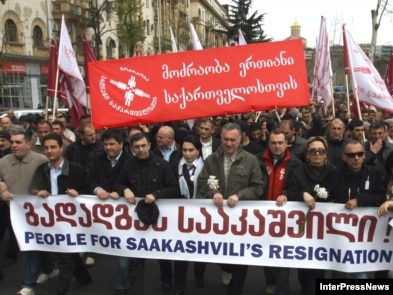
Craziness is still going on in the Republic of Georgia, and I don't mean my dad, his new Georgian wife, and my new five year old step-brother (who doesn't speak english) and neither of whom I have met. Here are some interesting thoughts by Mr. Heinz-Kerry and David Dreier.

Artist rendering of my dad's wedding?


Washington Post Editorial:

As the Obama administration seeks a fresh start in our strained relationship with Russia, the case for cooperation with Moscow on everything from nuclear terrorism to global finance is clear and compelling. So, too, is the case for protecting the freedom and sovereignty of the fledgling democracies on Russia's borders. We must do both.

Part of the way we can continue to support allies such as Georgia even as we do more to pursue vital national interests alongside Russia is by focusing on areas that can deliver real benefits to one side without hurting ties to the other. That's why we believe we should sign a free-trade agreement with Georgia and why we plan to introduce a resolution to this end today.

While some mistakenly view constructive relations with these two countries as mutually exclusive, we see no inherent contradiction in offering Russia a fresh start while maintaining our commitment to ensuring that its neighbors have the right to choose their own destinies. Yes, sometimes Russia and its neighbors see the world in zero-sum terms -- and sometimes their interests collide violently, as when Russian tanks rolled into Georgia last August. But we need not define our relationships with these countries the same way.

Georgia, as the scene of recent tensions, is an important place to find better approaches. It is suffering from the economic impact of two catastrophes: Soon after Russian missiles stopped falling last summer, Georgia was hit by the global economic crisis. It is vital that we help Georgia weather the economic crisis -- and doing so should not be threatening to Russia. In the past year we have largely fulfilled our pledge of $1 billion in postwar reconstruction aid to Georgia, but in the long term, increased trade and foreign direct investment would have far greater and more sustainable benefits. In the year before the war, trade between the United States and Georgia amounted to $580 million -- a total with significant room to grow.

A trade agreement with a small country half a world away would not have negative consequences for workers here at home, but it could mean a great deal to Georgians far beyond the trade it directly sparks. First, even the act of launching negotiations may increase investor confidence in Georgia and attract badly needed foreign direct investment. Our pact with Jordan shows how an American trade agreement can attract international businesses, even in volatile regions and even before the deal takes force. An agreement between the United States and Georgia could also create momentum for a similar deal between Georgia and the European Union. Building economic ties between Georgia and the West, particularly the neighboring European Union, is the least strategically costly way to significantly bolster the Georgian people's democratic and economic aspirations.


Second, bilateral trade negotiations would provide impetus for greater economic and political reform in Georgia. The Georgian people have committed themselves wholeheartedly to democracy, but the path to stable, effective and fully representative democracy is not an easy one. Greater economic engagement would provide a tremendous opportunity to hold Tbilisi accountable in its efforts to enshrine the rule of law and build the institutions that are the foundation to both democratic governance and economic prosperity.

Geography cannot be denied; Georgia and Russia should eventually restore strong trade relations. Today's standoff hurts both nations. Even two years before the conflict last summer, Russia severed transportation links and blockaded Georgian exports of mineral water, fruits, vegetables and wine. It would be a positive step if Russia removed these restrictions. It is notable that despite the rising tensions before last summer's war, the Georgian government had accepted Russian investment in Georgia, even in its infrastructure, an area in which other countries are often reluctant to allow even their friendliest neighbors to invest. Russian and Western investment should ultimately co-exist in the healthy atmosphere of a democratic Georgia whose sovereignty is respected.

Of course there will be times when we must stand on principle in the face of real disagreement -- and we certainly will. The 2008 Russian-Georgian war was a tragedy that cannot be repeated. We have both been to Georgia and met with its leaders. Georgia's people deserve praise for their impressive democratic and economic accomplishments, and America should support Georgia's undeniable right to its territorial integrity and independence.

In addition, Russia should fully implement its cease-fire agreement and adopt a more constructive attitude toward the full deployment of international monitors to help preserve peace.

But the challenges of a new moment demand a commitment to creative solutions. Economic prosperity has a way of spreading throughout both sides of a trading relationship and may offer the best long-term solution to forging some form of reconciliation between Georgia and Russia. Over time, increased trade and a higher quality of life may also help to heal wounds between Georgia and its alienated separatist regions.

History has shown that, when done right, trade brings benefits to all sides. Diplomacy can do the same. We need to use both to build closer ties with Russia even as we continue to support our friend and ally Georgia.

Wednesday, May 6, 2009

Am I becoming a fan of hockey? Maybe of DC having ONE winning team?


The Great Ones Get It
By Michael Wilbon

Ted Leonsis recalls the return trip from the NHL awards ceremony last June.

Alex Ovechkin had won the Hart Memorial Trophy as the league MVP, the Lester B. Pearson Award as the most outstanding player chosen by the NHL Players Association, the Art Ross Trophy as the league's top point scorer and the Maurice Richard Trophy as the league's top goal scorer. There was so much hardware, it nearly didn't fit on the plane.

As thrilled as Leonsis was that one of his team's players had been so decorated, Leonsis said to Ovechkin: "Do you want to be like Charles Barkley, a great player and a big personality who makes a lot of money and is loved by everybody? Or do you want to be like Michael Jordan and win championships?" Asked after Monday night's Game 2 victory over the Pittsburgh Penguins if he recalled Ovechkin's response, Leonsis said, "Alex knows that a place in history only comes with winning the Stanley Cup."

Ovechkin's real and more meaningful response to that question has come in recent playoff games, particularly Monday night's three-goal outburst that led the Washington Capitals to a 2-0 series lead over Pittsburgh. Sidney Crosby scored all three of the Penguins' goals, but there was a bodaciousness about Ovechkin's performance that right now separates him from every player in the game, including the gifted Crosby.

You can't expect Ovechkin to explain it in his still developing English, but there's something universally understandable about "give me the puck and get the hell out of my way." Or as Leonsis said late Monday night: "Sid is the best white wine the restaurant has to offer. Alex is a Denver Slammer, a shot of tequila in a glass of champagne. You whack the glass so that the fizz is coming up and you just shoot it."

Crosby is a wonderfully skilled player, technically superior.

Ovechkin is a beast. He explodes, like a tornado. Ovechkin is scary. His shot is scary. There's an aggression about him, a barely controlled fury that Crosby, great as he is, doesn't have. Nobody else has it. Watching Ovechkin on Monday night reminded me of watching Bobby Hull play for the Chicago Blackhawks when I was a kid.

He's the fastest, toughest guy with the biggest shot, the fewest teeth.

Every great player wants to win. Ovechkin wants to beat you down.

Continues............


WP: Opinion - The Cost of Climate Inaction

By Kristen Sheeran and Mindy Lubber in the Washington Post:

Robert J. Samuelson's April 27 op-ed, "Selling the Green Economy," was way off the mark on the economics of tackling climate change. It was a call to bury our collective heads in the sand simply because the future involves uncertainty -- exactly the opposite of what we need to do.

Samuelson argued that the cost of moving to a clean-energy economy is higher than advocates expect and that transition can't happen nearly fast enough to meet the ambitious goals proposed in the climate and energy bill sponsored by Reps. Henry Waxman (D-Calif.) and Edward Markey (D-Mass.).

But this assumes that all costs involved in mitigating climate change -- and there will be costs -- represent new costs, without acknowledging the massive error in our market system that equates the price of carbon emissions to zero. This fundamental error skews everything that follows, because if emitting carbon costs nothing on a balance sheet, all steps to reduce pollution count as "new costs."

The real cost of carbon emissions is far from zero. Each new scientific report brings proof of a changing climate that promises to disrupt agricultural patterns, set off a scramble for dwindling resources, raise sea levels, propel population shifts and require massive emergency spending as we try to react to the growing crises. These are the costs of inaction.

A smart climate policy can create a mechanism to put the right price on carbon, and rapid economic change will follow that firm price signal, along with reduced climate risks. Our work with more than 100 economists nationwide and at RealClimateEconomics.org demonstrates the weight of economic analysis supporting this point.

The failure to put a real price on carbon emissions also undermines Samuelson's second point, that we cannot switch to clean energy technologies quickly. Many claim that these technologies will not work, at least in a cost-effective way, because we would already be using them if they did.

But we are not using them enough now because we have set the price of carbon pollution at zero and have devoted most of our financial incentives to fossil fuel production to gas up our vehicles, heat our homes and power our factories. Acknowledging the climate crisis and pricing its risks correctly, instead of passing them on to our children, would produce an amazingly quick shift to new technologies and behaviors. We change habits when it makes economic sense to do so. Price matters.

Ultimately, households and businesses care more about their total energy bill than costs per gallon or per kilowatt hour. Gas at $4 per gallon is cheaper in a car that gets 40 miles per gallon than $3-a-gallon gas in a clunker that gets 20 mpg. American entrepreneurial and research genius can move us to far greater energy efficiency quickly, using mostly existing technologies, when a carbon price rewards the effort.

The economic impacts on households, then, may not be as dramatic as some warn. We can mobilize the political will for clean technologies and emissions reduction when, as economic research demonstrates, there is a visible payoff in jobs and strides in international competitiveness from these technologies.

And none of this is in conflict with the business community. Quite the contrary. Consider Business for Innovative Climate and Energy Policy (BICEP), a coalition of nationally and globally known companies including Nike, Starbucks, Sun Microsystems, Timberland and Levi Strauss that the investor coalition Ceres coordinates. The heads of these companies believe that passing strong climate and energy legislation this year is in the interests of both the planet and their businesses.

Some BICEP businesses already see climate change affecting their supply chains, manufacturing and international markets. Those are costs. These companies see strong climate and energy policy as pro-business because increased energy efficiency saves them money and clear price signals on carbon help them plan competitive strategies on a more level playing field.

The cost of inaction is high and could be catastrophic. But, contrary to claims, the cost of switching to cleaner energy and dramatically lower emissions will spur competitive gains, cost far less and come much more quickly once we have set our goals, adjusted our incentives and corrected the market's false signals.

History shows that big changes often come in a rush, unforeseen by the critics of the day. We believe that honest accounting for the reality of climate change will bring a convergence of effort and interests, triggering change on a scale that will, once again, alter the course of history.

Kristen Sheeran is executive director of the Economics for Equity and the Environment Network, a nationwide group of economists focused on environmental policy. Mindy Lubber is president of Ceres, a national coalition of investors, environmentalists and public interest groups working with companies to address sustainability challenges.

Tuesday, May 5, 2009

D.C. Gay Marriage Measure Set for Mayor's Signature


This an important first step for DC, and for a Federal protection of same-sex marriage. This isn't about defining marriage, this is about civil and human rights.

Washington Post:

An overwhelming majority on the D.C. Council voted today to recognize same-sex marriages performed in other states, sending the District deeper into the national debate and galvanizing supporters on both sides of the issue.

The measure, approved by a vote 12 to 1, now goes to Mayor Arian M. Fenty (D), a supporter of gay marriage.

If Fenty signs it, the District will put the same-sex marriage issue directly before the Congress. Under Home Rule, the District's laws are subject to a 30-day congressional review period.

After the vote, a large crowd of opponents, led by local ministers, began yelling "Get them off the council!" referring to the members who supported the measure. After the vote, a large crowd of opponents, led by local ministers, began yelling "Get them off the council!" referring to the members who supported the measure. The crowd caused such a ruckus that security guards and D.C. police officers had to be called in to restore order.

"We need a new Council. They are destroying our youth," shouted Paul Trantham, who lives in Southeast. "Every minister who fears God should be here. This is disrespectful to the nation's Capitol. There is nothing equal about same-sex marriage."

Another protester, C.T. Riley, added: "This is not over. We are going to the hill with this issue." Continues......

Thursday, April 30, 2009

ChevronToxico


www.chevrontoxico.com

I met with the attorneys from this case yesterday, and it is shocking that this was allowed to go on. Beyond the emissions, this is the cost of driving your car, flying, buying things that aren't locally produced. This is capitalism at its best. HOOOORAY! This goes way beyond just an environmental issue. This is also a fundamental human rights issue.

From the WashingtonPost: Deep in the northern Ecuadoran rain forest, next to pits filled with noxious sludge, a lawyer on his very first case argued that a U.S. oil company had deliberately fouled a swath of jungle nearly the size of Delaware during two decades of production.

Wearing a straw hat for the recent outdoor hearing, Pablo Fajardo was delivering the final arguments in a lawsuit that began in New York in 1993 against Texaco but is wrapping up here against Chevron, which bought Texaco in 2001. The stakes are high -- and so tinged with nationalism that Ecuador's President Rafael Correa has openly sided with the plaintiffs, 48 individuals representing tens of thousands of people in the region.

If the judge rules against Chevron, the company could face the largest damages award ever handed down in an environmental case, dwarfing the $3.9 billion awarded against ExxonMobil for the 1989 spill in Alaska.

A report by a court-appointed team last year concluded that pollution caused mainly by Texaco's Ecuadoran affiliate, Texaco Petroleum, had led to 1,401 cancer deaths in this stretch of Amazonian jungle. The team's leader, Ecuadoran geologist Richard Cabrera, reported finding high levels of toxins in soil and water samples near Texaco's production sites and assessed damages at up to $27.3 billion....(continues)

Monday, April 20, 2009

WP: Somalia's Godfathers: Ransom-Rich Pirates - Coastal Villagers Find Blessings And Ruin at Hands of Sea Robbers


NAIROBI -- The young Somali couple had plans. Ilka Ase Mohamed and the love of his life, tall, bright-eyed Fatima Mukhtar, were going to leave their little fishing town of Harardhere, attend university and, when Mohamed had enough cows for a dowry, get married.

But a little over a year ago, the woman Mohamed still calls "my beloved girl" was betrothed to a Somali pirate who wears a black cowboy hat, drives a Land Cruiser and paid $50,000 cash in what Mohamed described as a soulless deal with her mother.

"This man was like a small king who came to Harardhere," said Mohamed, 23. "He was dressed like a president. So many people attended him. I got so angry -- I said, 'Why do they accept this situation? You know this is pirate money!' "

The story of Mohamed, Fatima and the brazen Somali pirate -- based on an interview with Mohamed after he moved to Kenya -- underscores how entrenched piracy and its flashy new-money culture have become in the tiny, worn-out fishing villages that dot Somalia's coast.

As the world's most powerful navies patrol the vast shipping lanes of the Indian Ocean and the Gulf of Aden, Somali pirates are commanding millions in ransom for the massive cargo vessels they seize. Even since a U.S. show of force last week, when Navy snipers killed three pirates and freed an American captain being held hostage, pirates have seized several more ships with dozens of hostages.

Given the challenge of patrolling more than a million square miles of ocean, attention is turning toward fighting piracy from the Somali shore, where ransoms that totaled about $50 million last year are pouring into fishing villages such as Harardhere, and well-armed pirates are overwhelming what little local authority exists in a country that has been without a functioning central government since 1991......continued...

Friday, April 17, 2009

WP: EPA to Propose Regulating Greenhouse Gas Emissions


The Environmental Protection Agency today plans to propose regulating greenhouse gas emissions on the grounds that these pollutants pose a danger to the public's health and welfare, according to several sources who asked not to be identified.

The move, coming almost exactly two years after the Supreme Court ordered the agency to examine whether emissions linked to climate change should be curbed under the Clean Air Act, would mark a major shift in the federal government's approach to global warming.

Former President George W. Bush and his deputies opposed putting mandatory limits on carbon dioxide and other greenhouse gases for years on the grounds that it would harm the economy; Congress is considering legislation that would do so but it remains unclear whether it can pass the proposal and enact it into law in the near future.

Late last month EPA sent the White House a formal finding that greenhouse gases endanger public health and welfare; the Office of Management and Budget signed off on the determination Monday.

When reached this morning, EPA spokesman Allyn Brooks-LaSure declined to comment on the matter.

President Obama pledged to limit greenhouse gases as a candidate, but has urged Congress to send him a bill that would cap them and allow emitters to trade pollution allowances nationwide. EPA administrator Lisa P. Jackson, in a speech at the Aspen Environment Forum last month, emphasized that the administration still hopes the country will develop a legislative answer to the question of how best to limit greenhouse gases.

"The best solution, and I believe this in my heart, is to work with Congress to form and pass comprehensive legislation to deal with climate change," Jackson said. " We hope to avert a regulatory thicket where governments and businesses spend an inordinate amount of time fighting. We are not looking for a doomsday solution."

Some business groups, such as the U.S. Chamber of Commerce, have warned that if the federal government regulates carbon dioxide under the Clean Air Act it will end up imposing an enormous regulatory burden on small operations such as individual stores and even some office buildings.............Continued....

Thursday, April 16, 2009

WP: Renewable Energy's Environmental Paradox

The SunZia transmission line that would link sun and wind power from central New Mexico with cities in Arizona is just the sort of energy project an environmentalist could love -- or hate. And it is just the sort of line the Interior Department has been tasked with promoting -- or guarding against.

If built, the 460-mile line would carry about 3,000 megawatts of power, enough to avoid the need for a handful of coal-fired plants and to help utilities meet mandated targets for use of renewable fuel. "We have to connect the sun of the deserts and the winds of the plains to places where people live," Interior Secretary Ken Salazar said recently.

But the line would also cross grasslands, skirt two national wildlife refuges and traverse the Rio Grande, all habitat areas rich in wildlife. The graceful sandhill crane, for example, makes its winter home in the wetlands of New Mexico's Bosque del Apache National Wildlife Refuge, right next to the path of the proposed power line. And much of the area falls under the protection of the Interior Department's Bureau of Land Management (BLM).

Renewable-energy development, which the Obama administration has made a priority, is posing conflicts between economic interests and environmental concerns, not entirely unlike the way offshore oil and gas development pits economics against environment. But because of concerns about climate, many environmentalists and government agencies could find themselves straddling both sides, especially in Western states where the federal government is a major landowner.

"Everybody in New Mexico loves the sandhill cranes," said Ned Farquhar, a former aide to New Mexico Gov. Bill Richardson (D). "We also love our renewable energy. So we have to figure this out."

Farquhar made that comment a month ago when he was working for the Natural Resources Defense Council. Since then, he has been appointed head of the BLM -- in charge of figuring it out.


As the push for renewable-energy development intensifies across the United States, scientists and activists have begun to voice concern that policymakers have underestimated the environmental impact of projects that are otherwise "green."

"There is no free lunch when it comes to meeting our energy needs," said Johanna Wald, a senior lawyer at the Natural Resources Defense Council. She added, however, that the renewables boom "offers a chance to do it right."

"We want to do it differently compared to how we did oil and gas development," she said.

There is no question that permit applications for renewable-energy projects are on the rise, especially on federal land in the West. According to Ray Brady, leader of the BLM's energy policy team, the bureau has received 199 applications for solar projects encompassing 1.7 million acres of land, though only two of them have undergone environmental assessments.

The agency has already authorized 206 wind projects -- 28 of them to generate power, the rest primarily to test a region's wind-generation capacity -- and at least 200 more are awaiting approval.

The fact that eight Western states have established "renewable portfolio standards" has accelerated the push for new projects, Brady said, because those policies are forcing utilities to find additional renewable sources of electricity.

"For all of these reasons, BLM does have a challenge because of the additional work involved," said Brady, who predicted that the agency may hire as many as 100 people just to work on renewable-energy permits. "Clearly there's an interest in expediting and streamlining the process. However, we need to make the right decisions that are based on the best science."

One of the biggest challenges renewable-energy projects pose is that they often take up much more land than conventional sources, such as coal-fired power plants. A team of scientists, several of whom work for the Nature Conservancy, has written a paper that will appear in the journal PLoS One showing that it can take 300 times as much land to produce a given amount of energy from soy biodiesel as from a nuclear power plant. Regardless of the climate policy the nation adopts, the paper predicts that by 2030, energy production will occupy an additional 79,537 square miles of land.

The impact will be "substantial," said Jimmie Powell, the Nature Conservancy's national energy leader and one of the paper's co-authors. "It's important to know where the footprint is going to be."

In some cases, scientists are just beginning to discover the unintended effect of projects such as wind turbines. Grassland birds such as the lesser prairie chicken and the greater sage grouse, both of which are candidates for listing under the Endangered Species Act, appear to avoid vertical structures such as wind turbines and transmission-line towers. This is proving to be a problem in states such as Kansas, an ideal site for wind power, because as more turbines are built, lesser prairie chickens will confine themselves to narrow ranges, fragmenting a population that must be connected to survive.

ad_icon

"Nobody knows what's in the bird's head, but presumably there's an inherited behavior that allows the birds to avoid avian predators who could perch overhead," said Michael Bean, wildlife director for the Environmental Defense Fund, an advocacy group.

The U.S. Fish and Wildlife Service has proposed requiring that developers keep wind turbines at least five miles away from a prairie grouse lek, or mating area, but the wind industry has resisted this idea.

Ditlev Engel, president and chief executive of the Danish wind-energy company Vestas, said anecdotal evidence about birds being caught in turbine blades and other environmental horror stories do not usually hold up under scrutiny.

"Do people think it's better all those birds are breathing CO2? I'm not a scientist, but I doubt it," said Engel, whose company is expanding its U.S. manufacturing and distribution operations. "Let's get the facts on the table and not the feelings. The fact is, these are not issues."

In many instances, producers of renewable energy are coordinating with environmental groups and federal agencies to try to map out the best locations for energy production, whether in the West or offshore. The Natural Resources Defense Council and the National Audubon Society have created an online mapping project, using Google Earth, of 13 Western states to show where renewable projects would have the most impact. Out of the 860 million acres in those states, for example, there are 10,000 conservation areas, and 128 million acres are off limits to energy development.

In the case of SunZia, the company has been working to minimize the impact of its proposed transmission line. Tom Wray, manager of generation and transmission projects, said that as much as 80 percent of the line's path would parallel existing lines. He said that it would cross the Rio Grande north of the sandhill crane's flyway and that it would zig and zag to skirt environmentally sensitive areas. Every mile added to the length of the line, however, would add about $1 million to the project.

"We're not aware of any threatened or endangered species habitat or impact issues that we can't mitigate or deal with," Wray said.

Lawrence A. Selzer, president of the Conservation Fund, said the new administration is eager to advance these projects without alienating environmentalists. "The answer from President Obama can't be no," he said. "They've got to find a way to say yes."

Monday, April 13, 2009

WP: Kill the Pirates


Washington Post: With the rescue of American Richard Phillips from the hands of pirates yesterday, there was a blip of good news from the Indian Ocean, but it remains a scandal that Somali pirates continue to routinely defeat the world's naval powers. And worse than this ongoing demonstration of cowardice is the financing of terrorists that results from the huge ransom payments these pirates are allowed to collect. It is naive to assume that the millions paid annually in ransom to pirates merely enables them to purchase villas and fancy automobiles. Somalia is a country without government, where anarchy is being exploited by terrorist organizations. Although the threat that pirates pose to commercial ships is increasingly known, little is being done to combat it. And we must consider the bigger picture: Terrorists are far more brutal than pirates and can easily force pirates -- petty thieves in comparison -- to share their ransom money.....http://www.washingtonpost.com/wp-dyn/content/article/2009/04/12/AR2009041202262.html

The bigger question should be how to stop the root cause of the poverty and lawlessness from which this piracy is born. Could it be a failed state that and neglected people that have been living in wild west conditions since the 90s? Untold numbers of innocent people live in poverty in Somalia with no hope of raising themselves out of their situation within their own borders. Foreign aid missions cannot function there without a functioning government, and the most lucrative source of income is piracy. I'd be willing to be that the top echelon of Somalian intellects work in piracy, simply because it is the most entrepreneurial business around. Do I have a solution? No. But I don't think simply patrolling the coast will solve all the problems. That is like sending more cops into a riot, instead of asking why the people are angry.

Friday, April 10, 2009

WP: Crimes That Deserve Punishment - Eugene Robinson


It's no longer possible to mince words, or pretend we didn't know. The International Committee of the Red Cross concluded in a secret report that the Bush administration's so-called "enhanced" interrogation methods, used on "high-value" terrorism suspects, plainly constituted torture. The time for euphemisms is over, and the time for accountability has arrived.

http://www.washingtonpost.com/wp-dyn/content/article/2009/04/09/AR2009040903523.html