Showing posts with label Economy. Show all posts

Monday, July 13, 2009

Economist: Lines in the sand


Economist:

Climate change could ignite wars in volatile regions
THE Matterhorn, an iconic emblem of the Alps, has two peaks: one on its Swiss side and one on its Italian side. Between them, the boundary separating the two countries traces the mountain ridge until it reaches the glacier at its base. According to a convention agreed long ago between Switzerland and Italy, the ridge of the glacier marks the border between the two countries. But the glacier is now receding, so a draft agreement has been proposed to create a new border that coincides with the ridge of the underlying rock.

The proposed change to this particular international border is unlikely to result in war. As the world warms up, however, more and more countries will need to renegotiate their boundaries. Your correspondent is concerned that a peaceful outcome is by no means assured.

Indeed, two recent reports from the Centre for Naval Analysis, an American military-research institute, suggest that border-related conflicts are a growing threat. In its report on “National Security and the Threat of Climate Change”, published in 2007, it warns that “Climate change can act as a threat multiplier for instability in some of the most volatile regions of the world.”

Nowhere is this truer than along the disputed sections of India’s border with Pakistan and China. India and Pakistan have been locked in occasionally violent competition for control of Kashmir since their bloody partition in 1947. James Lee of the American University in Washington, DC, reckons “it is a very good bet that the Kashmir glaciers will get caught up in the India/Pakistan dispute.”

India’s border with China is also unresolved. The two countries fought a brief war over it in 1962. In early June, India signalled that it would boost its military presence close to the border. China responded on June 9th, when the Chinese Global Times published an editorial entitled “India’s Unwise Military Moves” denouncing India’s troop deployment.

At the same time, the melting of sea ice around the north pole is causing old rivalries to heat up over conflicting claims to what could be valuable stretches of seabed that are becoming accessible as a result. The same report from the Centre for Naval Analysis warns that “an Arctic with less sea ice could bring more competition for resources, as well as more commercial and military activity.” And at the other end of the world Chile and Argentina, which last had an armed standoff in 1978, have yet to agree formally on a borderline through the southern Patagonian ice fields, which will affect their overlapping seabed claims.

Rising sea levels will also eat away at all coastal communities, especially large, densely populated portions of many South and South-East Asian countries as well as tiny island nations in the South Pacific. In Bangladesh, where about 10% of the country is less than a metre above sea level, tens of millions could be displaced by global warming. India has already constructed a 4,100 kilometre (2,560 mile) fence along the border in an attempt to curb illegal immigration.

As the Centre for Naval Analysis states in its most recent report, “Powering America’s Defence”, which was published in May, “climate change could increasingly drive military missions in this century.” Many of these missions could involve environmental refugees fleeing marginal cropland, the productivity of which is likely to be reduced by global warming. It is worth noting that the report also found the American border to be at risk.

Monday, April 20, 2009

WP: Somalia's Godfathers: Ransom-Rich Pirates - Coastal Villagers Find Blessings And Ruin at Hands of Sea Robbers


NAIROBI -- The young Somali couple had plans. Ilka Ase Mohamed and the love of his life, tall, bright-eyed Fatima Mukhtar, were going to leave their little fishing town of Harardhere, attend university and, when Mohamed had enough cows for a dowry, get married.

But a little over a year ago, the woman Mohamed still calls "my beloved girl" was betrothed to a Somali pirate who wears a black cowboy hat, drives a Land Cruiser and paid $50,000 cash in what Mohamed described as a soulless deal with her mother.

"This man was like a small king who came to Harardhere," said Mohamed, 23. "He was dressed like a president. So many people attended him. I got so angry -- I said, 'Why do they accept this situation? You know this is pirate money!' "

The story of Mohamed, Fatima and the brazen Somali pirate -- based on an interview with Mohamed after he moved to Kenya -- underscores how entrenched piracy and its flashy new-money culture have become in the tiny, worn-out fishing villages that dot Somalia's coast.

As the world's most powerful navies patrol the vast shipping lanes of the Indian Ocean and the Gulf of Aden, Somali pirates are commanding millions in ransom for the massive cargo vessels they seize. Even since a U.S. show of force last week, when Navy snipers killed three pirates and freed an American captain being held hostage, pirates have seized several more ships with dozens of hostages.

Given the challenge of patrolling more than a million square miles of ocean, attention is turning toward fighting piracy from the Somali shore, where ransoms that totaled about $50 million last year are pouring into fishing villages such as Harardhere, and well-armed pirates are overwhelming what little local authority exists in a country that has been without a functioning central government since 1991......continued...

Thursday, April 16, 2009

Economist: Rainfall and GDP - How rainfall can affect economic growth


DEVELOPING countries are more at risk from climate change because of their dependence on agriculture, especially the subsistence sort with poor irrigation. Climate variability has a more severe impact on the economies in which agriculture is a large share of GDP. In Ethiopia, around 75% of the population are dependent on farming, which is almost entirely small-scale and rain-fed. A further 10% earn their living from livestock. During the famine of the 1980s, rainfall was well below average and growth plunged. Whether rainfall is an accurate indicator of GDP growth is another matter, however. This chart from the United Nations appears to show changes in GDP growth preceding similar changes in rainfall in certain years.

Tuesday, April 14, 2009

Economist: Environmental values - How to ensure the environment is properly accounted for


ANY attempt to put an economic value on fresh air, clean water or tropical rainforests can offend the delicate sensibilities of those who argue that the conservation of nature is a moral duty. Yet although the best things in life appear to be free, that does not mean they are without financial value. It simply means that nobody asks you to pay when, for example, you watch a beautiful sunset over the hills. Putting a financial value on the environment, however, may be the most important thing that people can do to help nature conservation. When governments allocate money, they do so according to where it will bring benefit. If a government is unaware of the value of a landscape to its tourism, or of a swamp to its fishing industry—and thus its foreign-exchange income—then it will invest too little in managing these resources. Worse, if the true value of a forest or swamp is hidden, governments may destroy it by subsidising the conversion of the land to agriculture. The costs are unknown for now, but may appear eventually as the price of building a filtration plant to remove the sediment from the water that the forest once took care of, or the price of importing food when fish vanish.Some estimates of the annual contribution of coastal and marine ecosystems to the global economy exceed $20 trillion, over a third of the total gross national product (GNP) of all the countries of the world. Even so, says Katherine Sierra of the World Bank, such ecosystems are typically much undervalued when governments made decisions about development. Glenn-Marie Lange, also of the World Bank, attended a meeting in Washington DC organised by her employer to launch its report “Environment Matters” on April 6th. She told participants that one of the reasons why ecosystems become degraded is that their value to local people is often small. As a result, these people do not have much reason to manage their resources carefully. She estimates, for example, that only 36% of the income generated by the coastal and marine environments in Zanzibar goes to locals. Most of this comes from fishing; only a tiny fraction of the money from tourism ends up local hands. More broadly, Dr Lange wants the value of the environment to be integrated into national and local accounting. She argues that governments should identify the contributions that marine ecosystems make to their countries’ GNPs and foreign-exchange earnings. She also wants them to examine whether or not they are running down their countries’ “natural capital”. Emily Cooper of the World Resources Institute, an environmental think-tank, put some figures on the value of tourism, recreation, fisheries and shoreline protection in Belize. It was an impressive $395m to $559m. The entire economy was worth about $1.3 billion in 2007. These figures, she thinks, have allowed environmentalists to protect Belize’s threatened mangrove forests better. For too long, an absence of proper green accounting has allowed people to privatise the gains from the environment but socialise the costs, to paraphrase Carl Safina, an American scientist and environmentalist at the meeting. As Dr Safina puts it, “conservation is not a trade-off between the economy and the environment. It is a trade off between the short and long term.”

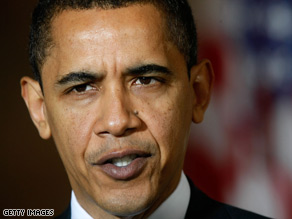
Obama will be speaking live today at Georgetown at 11:30 AM about the Economy


http://www.cnn.com/live/