Monday, June 15, 2009

Chicago NOOD


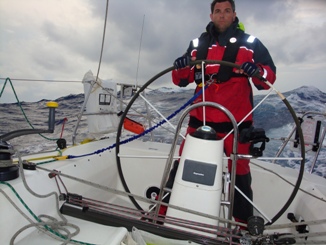
So the Bat-phone just rang, and it looks like I'll be heading out to Chicago to do the NOOD (National Offshore One-Design) on a First 40.7 called Mojo. They need a bowman, so it looks like I'll be heading there Thursday night to start racing Friday AM.

I did the Annapolis NOOD on a J24 about a month ago.

Look for me getting banged up on the bow of Mojo. Breeze is looking like 15-20 knots with gusts to 30.

Alchemist "Smile" ft. Twista & Maxell


Alchemist is back with more solo material and for his first single he teamed up with Twista and Maxwell and made us "Smile." Check out the debut of the video directed by Jason Goldwatch above and mark your calendars for July 7th when Al's album Chemical Warfare is in stores. This video has more set ups than a volleyball tournament. Be on the look out for Goldwatch and ALC's mixed-media group, Media Muerte, coming later.

Madcon - Beggin'


Props to Mark A. for putting this on my radar.

Slum Village - Remember The Classics [Mixtape]


Download: Slum Village - Remember The Classics

Friday, June 12, 2009

Annapolis to Newport Results

So I had yet to look closely at the results from the Annapolis to Newport race, but just did and realized that we correct over every single one of the IRC boats, including the famed Rambler.

Rambler, who won IRC, posted the finish time of 2/09:16:06.0, with a corrected finish of 3/02:45:08.6.

Our boat, Heron, which won PHRF II and the PHRF Fleet, posted the finish time of 3/16:05:24.0, but a CORRECTED finish of 2/21:13:21.0.

This means that we corrected of Rambler. We obviously won PHRF by a mile, but also beat Rambler in corrected time by a few hours as well.

Results

Economist: Seeing REDD in the Amazon


Economist:

Saving rainforests needs both property rights and payments

FORESTS lock up a lot of carbon. Cutting them down accounts for around 20% of the world’s emissions of greenhouse gases. On paper, halting deforestation should be the simplest way to cut emissions. Achieving a similar reduction by building wind turbines or nuclear-power stations, or by mandating more fuel-efficient cars and buildings, would take years and cost billions. In practice, however, halting deforestation is hard: much of the world’s rainforest has already succumbed to loggers and farmers. That is because it is difficult to align the interests of people who live in forests (now 20m in the Brazilian Amazon) with those of the rest of humanity.

The best way of doing so involves a mixture of two ideas: establishing clear property rights over land and paying its owners not to cut down trees. If these policies are to work anywhere, it will be in Brazil, which possesses 60% of the world’s greatest tropical forest. Brazil has powerful motives for preserving the Amazon. Deforestation does terrible damage to the reputation of a country that is a pioneer in renewable energy. It also puts at risk the Amazon rain factory that enables Brazil to be one of the world’s biggest agricultural exporters.

Brazil now has a sophisticated system for monitoring deforestation from satellites and aeroplanes. It has set aside some 40% of the Amazon as national parks or Indian reserves. It has laws that restrict deforestation in the rest. The problem is enforcing those laws over a vast area where many of the inhabitants dislike the rules (see article). The first step is a proper land registry to confirm who owns what. Some 15-25% of the Amazon is private property, which is supposed to be kept 80% forested (though often is not). Most of the rest is nominally federal land, but in practice is up for grabs: title deeds are forged, people are killed and deforestation accelerates because of competing claims. Some farmers even clear trees as a way to solidify land claims: fines from Brazil’s environmental agency can create a paper trail that acts as proof of ownership.

A law approved this month by Brazil’s Congress aspires to end this mess—but at a price. It would grant title to all landholdings up to 1,500 hectares (3,700 acres) occupied before 2005 in the Amazon, comprising an area the size of France, and ban further land claims. The law entrenches injustice: it risks rewarding people who used violence to obtain land, including large landholders who occupy almost 90% of the area under discussion. Brazilian greens want to limit the measure to smaller plots, and to ban their resale for ten years.

Yet that risks defeating the object. Better for the government to complement this attempt to end battles over privately owned land with a decision to take the rest of the Amazon into public ownership, as parks or reserves. Countries with rainforests also need to have due regard for their preservation and for the Indians who live in them when allowing mining and oil exploration. The lack of such procedures was behind a bloody clash in Peru this month (see article).

Lay down that axe and you will get cash

At the moment it makes economic sense to cut down trees: those who do so can sell the timber and turn the land into farms or ranches. So the second idea for saving forests lies in changing economic incentives by paying people not to chop down trees—an idea known in the ghastly jargon of climate-change diplomacy as “reduction of emissions from deforestation and degradation” (REDD). Since many rich countries felled their forests as they developed it seems fair that they should pay some of the cost of this.

There are difficulties, though. One is that “avoided deforestation” is hard to define and quantify. Another, raised by officials in Europe who have chosen not to include REDD in the European carbon-trading scheme, is that the carbon market would be flooded with deforestation credits that will push down the price. Companies would then buy cheap credits and continue doing business as usual rather than cutting their own emissions. Further tricky issues abound: who should have the right to sell credits? How should the money be split between central governments, local governments and indigenous people? And should the money be paid in perpetuity?

REDD schemes will require careful monitoring to ensure that forests really are left intact and that carbon credits for an area are not claimed more than once. Murky goings-on in Papua New Guinea, one of the leading advocates of REDD, highlight such worries (see article).

Even so, it is worth trying, simply because avoiding deforestation is so effective in slowing carbon emissions. So REDD deserves a place in the world climate treaty to be negotiated in Copenhagen in December, to replace the Kyoto treaty when it expires in 2012. As with other forms of carbon credit, today’s voluntary and experimental REDD schemes will need to be replaced by more rigorously accredited and monitored schemes. But they have a chance of working only if the countries in which they operate define forest land rights clearly. Brazil’s flawed attempt to do this is a step forward.

Thursday, June 11, 2009

Slacking..........

Yes, I've been slacking on the posts. Apologies. Gotta catch up on a few things and then I'll have time.

"Hip Hop Violinist" Miri Ben-Ari is playing the Apollo tonight

Miri's New EPK


Wish I had known about this sooner. Miri Ben-Ari is playing the Apollo tonight. She's been featured in songs by Twista and Kanye, and has her own album featuring a number of artists. She is known as the "Hip Hop Violinist." She's also not a bad looking woman.

Gotta love when classical styles mix with the streets.

Tickets available Here.


MC Lyte "Brooklyn"


Never EVER sleep on MC Lyte. She's been in the game for so long, keeps making hits

Wednesday, June 10, 2009

Annapolis to Newport Prize List


Big wins. Look for Heron on HERE.

New Album: The Ecstatic by Mos Def


The Ecstatic

Still getting back in the world. Hot album is a great welcome

Tuesday, June 9, 2009

Annapolis to Newport Race


Posted by Picasa

Thursday, June 4, 2009

Annapolis to Newport Race


Getting ready to head out of the office and off to class, but just wanted to make one final post before we debark for Newport, RI.

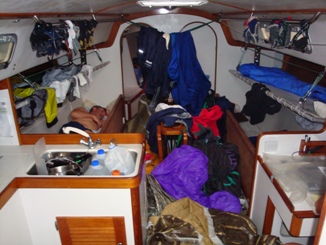
I'll be sailing on J120 Heron, a 40 ft boat which caries a asymmetrical spinnaker off of a bow sprit. The boat is owned by Greg Leonard of Bowie, MD.

You can follow the action HERE or check the boat's blog at http://heronracing.wordpress.com/. I will be blogging from there, but will try to post on here as well. We are looking to arrive in Newport by Monday night assuming all goes well and there is breeze. The weather looks decent, though there are storm clouds up and down the east coast. Nothing we can't handle.

We carry cellphones and blackberrys which work pretty well through most of the bay and out about 10-12 miles offshore. As do almost all boats, we carry several VHF radios including one with an antenna 56ft above the water that receives signals well over a hundred miles offshore and is a good source for general weather broadcasts. For the offshore races, we rent an Iridium satellite phone which provides expensive coverage of the entire east coast portion of the Atlantic.


Wale @ 930 Club x UCB x Young Chris

DDotOmen.com - Wale @ 930 Club x UCB x Young Chris from DDotOmen on Vimeo.


Last night

Wale "Family Affair"

ANOTHER Wale video release. Dude is on his grind.

6 Day Bender "Factory Man"


Here is a change of pace..... a great new song by 6 Day Bender off of their second album, coming out soon. They are a self-proclaimed "Mountain Rock" band out of Charlottesville, VA. This song Factory Man features Luke Nutting on acoustic guitar/vocals, Clayton Avent on electric guitar, Danny Breen on bass/harmonica, and Corey Gross on drums.

Luke and Clayton are highschool buddies of mine.

Check them out at http://www.6daybender.com or http://www.myspace.com/6daybender

They are on tour all summer up and down the east coast. Catch a show if you can. They are talented.

AM Update: Wale and A2N

Wale was amazing. I'll post my grainy pictures later. Was a great night.

Up next: ANNAPOLIS TO NEWPORT RACE.

First gun is at noon tomorrow.

Wednesday, June 3, 2009

Daily Throwback: Wale "Artistic Integrity"

Aight, before you jump on me about it, this is not exactly an old song. BUT, I'm stoked to go see Wale tonight (I'd put even money on Lady GaGa showing up in something ridiculous) and this song samples from Seinfeld, which is one of my (and Wale's) favorite shows and a definite throwback.

Enjoy

Economist: Ecuador, Chevron and pollution Justice or extortion?

I purposefully did not post this economist article yet because I wanted to get the response from Steven Donziger, the attorney's trying the case on behalf of the indigenous tribes. I was just on a conference call him, and both he and his their media rep explained the nefarious way the Economist reporter misrepresented what he was writing, didn't explain it was for the Economist, and only interviewed them for minor details. Steven Donziger wrote a letter the editor of the Economist, which will be published in the June 13 copy of the Economist.

Check out the BS flung by the Economist in this article (pretty surprised by them):

HIDDEN behind a row of trees and a rusted barbed-wire fence on a rutted dirt road in the Ecuadorean jungle, Shushufindi 61, a pit in which oil waste is dumped, is hardly a beauty spot. But it has attracted a string of visitors ranging from Hollywood actresses to Ecuador’s president, Rafael Correa, and managers from Chevron, an American oil company. It is one of several hundred such pits that are at the centre of a long-running legal wrangle between Ecuadorean and American activists and Chevron. For the activists, the case shows that oil companies are nowadays held accountable for their actions in developing countries. For Chevron’s supporters, the case amounts to an attempt at judicial extortion that throws doubt on whether multinational oil companies can ever get a fair deal in parts of Latin America today.

At issue is waste dumped by Texaco (bought by Chevron in 2001) as long ago as the 1960s in the region around Lago Agrio in the Ecuadorean jungle. From 1977 onwards, Ecuador’s state-owned oil company (now called Petroecuador) took a 62.5% stake in the field, though Texaco continued to operate it. In 1992 Petroecuador took over the whole operation and Texaco withdrew from Ecuador.

In a suit first filed in a New York court in 1993, lawyers representing 30,000 people in the Lago Agrio area argued that billons of gallons of waste dumped by Texaco in several hundred pits such as Shushufindi 61 caused damage to human health as well as to the jungle. They also argued that the oil company should compensate Indian people for their forced displacement. American judges ruled three times that they had no jurisdiction over the matter.

But as a result of the publicity generated by the cases, Texaco agreed with the Ecuadorean government that it would clean up 161 pits, or its share of the total, at a cost of $40m. The work was done by 1998 and the government signed an agreement releasing Texaco from any further liability. Petroecuador was supposed to clean up the rest of the pits, but didn’t do so, partly because it continues to use some of them (including Shushufindi 61).

Meanwhile Ecuador enacted an environmental law, something it had previously lacked. This is not retroactive. Nevertheless the plaintiffs filed a claim against Chevron under this law in 2003 in a court in Lago Agrio. They sought $6 billion in damages. Last year a court-appointed expert, Ricardo Cabrera, filed a 4,000-page report arguing that Chevron was liable for no less than $27.3 billion in damages. Of this $9.5 billion is compensation for 1,400 deaths from cancers that he alleges were caused by the pollution; $8.4 billion is for “unjust enrichment”; the remainder is for environmental clean-up.

Chevron has filed a 9,000-page rebuttal of Mr Cabrera’s report. It disputes his fitness as an expert, arguing that he has little experience of the oil industry. It found evidence that he used the Amazon Defence Front, a group working for the plaintiffs, to collect soil samples from sites. Sections of his report repeat verbatim documents filed by the plaintiffs. Chevron also notes that in 2007 a California court dismissed as fabricated some individual claims that the pollution caused cancers; it fined one of the plaintiffs’ lawyers for this. As for “unjust enrichment”, a Chevron manager points out that Texaco’s total profits from its operations in Ecuador were only $497m, while over the 20 years to 1992 Ecuadorean governments received $25.3 billion in profits, taxes and royalties from the field.

The judge in Lago Agrio, Juan Nuñez, is expected to rule on the case later this year. He has made no secret of his sympathy for the plaintiffs. The lawsuit appears to have the backing of Mr Correa’s government. Last year it objected to the 1998 agreement with Texaco, arguing that since the company was the operator of the field it should have cleaned up all of the pits. The attorney-general charged seven former senior officials who had signed the agreement with fraud, as well as two Ecuadorean lawyers for Chevron.

Chevron has filed a claim in an international arbitration court in The Hague and has asked the American government to review Ecuador’s trade preferences. But it faces political pressure in the United States as well as in Ecuador. On May 4th Andrew Cuomo, New York’s attorney-general, sent a letter to Chevron requesting information on the case on behalf of the state’s pension funds, which have more than $1 billion invested in the company.

If the Ecuadorean courts rule against Chevron, the plaintiffs’ lawyers can be expected to file suit in the United States to collect the settlement. Since they are working on a contingency basis, they stand to gain a substantial portion of any damages.

Texaco may have benefited from Ecuador’s past lack of environmental standards. It is questionable whether any of the pits would have been cleaned up had it not been for the campaigners. But the lawsuit may now be preventing Chevron from helping Petroecuador to clean up the rest. Ecuadoreans were the main beneficiaries from the oil—although some of them suffered some damage from it. They will also be the most important victims if the Chevron case shows that the rule of law is the servant of politics in Ecuador.

Wale - Chillin (feat. Lady GaGa)


Speaking of Wale, his video was just released an hour ago. Debut album Attention: Deficit coming soon.

TONIGHT: Rock the Vote Nights Present America's Future Now Official Concert featuring WALE with UCB


Show will headline Wale feauturing UCB, with Tabi Bonney, XO, Phil Ade, and Wordsmith. I'll do my first attempt at blogging a live show.

DC chillin'

If you don't know Tabi Bonney, learn him:

Kanye West "Spaceship"

Spaceship from kwest on Vimeo.


Here is the previously unreleased Kanye video for "Spaceship" from 2005.

Tuesday, June 2, 2009

Live blogging for Annapolis to Newport


The 62nd bi-annual Annapolis to Newport race starts a week from today, June 5th. With only a few more things to fix on the boat this weekend, we'll be ready to go (and win).


We will be live-blogging offshore at Heron Racing, and I may try to throw up a few posts on here as well.

I'll be on J/120 Heron for the race.

Consequence "Mr. Popularity"

Daily Show on Sotomayor


A comedic take on my argument about Sotomayor.

Monday, June 1, 2009

AJay Hopkins: Quarterlife Biz


My man AJ from high school.

This is hip hop.


Lyrics:

It's A Jilla
Yep, you guessed it
I heard the beat and I just had to come and bless it
I've been well rested
Since my last verse
I hung the mic up
And thought the game needed a hearse
In 03 I retired my rhyme book
When rap dudes started changing up like sam cooke
A lotta blingin and singin
And a lotta negativity
But they forgot the creativity
Plus I was in school
Bush over Baghdad created new world rules
I switched from writing rap pages to pushing mag pages
A different type of publishing
And even thought about government
Figured out that was the wrong route
I graduated in two-thou-six and went all out
The corporate world is my scene
Infinite chase for the green
But is this what the King really dreamed?

I'm on my quarterlife biz
Dedicated to alluv my quarterlife kids
I'm on my quarterlife biz
Stay up nights thinkin, "is this all life gives?"

X2

Now I'm a New York kid
Walk the same streets all my favorite rappers did
Nasty Nas, Ghostface, Rae, and Deck
Digable Planets, gotta pay my respect
Cause they were rap pioneers to me
A down south boy wondering what big city life could be
But the apple is rotten
Some girls came on the train screamin
Saw an old man and rocked him
I mean, right in his face
He just wanted some peace after a long day in the rat race
And everyody who saw it, did nothing
That's what the city breeds, if it aint you - it's nothing
And I'm as guilty as them, homey
Even around eight million people how you still feel lonely?

This is the quarterlife biz
Dedicated to alluv my quarterlife kids
This is the quarterlife biz
Stay up nights thinkin, "is this all life gives?"

X2

So you think that a girlfriend can take you out the whirlwind
Or family can make a better man G
But you'll never be nothin without inner lovin
Always lesser like 3 vers a half-dozen
I still hear screams in my dreams
Know what I mean?
But ion't think it's depression
Just agression
My ambition crying out in exhaustion
Fighting off submission, anxiety, and caution
And I'm saying my prayers, too
Even though the road gets hard I'm still trying to be faithful
And just stay on my grind
So when it's time
I can say that I went for mine
I went for mine
So go for yours

Cause this is quarterlife biz
Dedicated to alluv my quarterlife kids
It's the quarterlife biz
Stay up nights thinkin, "is this all life gives?"
I'm on my quarterlife biz
Dedicated to alluv my quarterlife kids
I'm on my quarterlife biz
Stay up nights thinkin, "is this all life gives?"


Check out AJay at http://adrianhopkins.com

Greenpeace Report: Global Shoe Brands May Be Unwittingly Causing Deforestation in the Amazon

Evidently Nike Boots have some downsides.

The cattle-deforestation connection in the Amazon is fairly common knowledge, but a new report from Greenpeace drives home the point: Raising cattle for beef and leather is a major factor in deforestation in the Amazon, and several international shoe brands may be buying leather from deforested areas and may not even know they are doing it:


Slaughtering the Amazon lays out the startling rate at which cattle raising is driving deforestation, saying that 80% of all deforestation in the Amazon region is now due to legal and illegal cattle ranches. And that's according to the Brazilian government.

Brazil Beating Indonesia in Deforestation
In total Brazil now has the highest annual rate of deforestation anywhere in the world—which is saying something considering the rates at which Indonesia and Malaysia are chopping down forests in pursuit of more palm oil plantations. Deforestation in the Brazilian Amazon now accounts for 14% of total global deforestation.

All of this deforestation makes Brazil the fourth largest emitter of greenhouse gases in the world, when all sources of emissions (not just fossil fuel burning and industry) are considered.

Leather 'Laundering' Hides Source from Industry & Consumers
As far as the connection between shoe brands—Greenpeace singles out Adidas, Nike, Reebok, Timberland, and others—and leather from cattle raised in deforested areas is concerned, the report says that these brands may believe that they don't use leather from these sources, but the reality may be different:

Greenpeace’s undercover investigation into the Brazilian cattle industry has exposed the many convoluted steps in the complex global trade in leather and beef products from part-Brazilian-government-owned corporations Bertin, JBS and Marfrig. We have identified hundreds of ranches belonging to these companies that are within the Amazon rainforest and supplying cattle to slaughterhouses in the Amazon region. Where we were able to obtain mapped boundaries for ranches, satellite analysis reveals that significant supplies of cattle come from ranches active in recent and illegal deforestation. Trade data also reveal trade with ranches using modern-day slavery. Additionally, one Bertin slaughterhouse receives supplies of cattle from an illegal ranch occupying Indian Lands.

These slaughterhouses in the Amazon region ship their hides and beef to company facilities thousands of miles away in the south of Brazil for further processing before export. In a number of cases, additional processing takes place in import countries before the final product reaches the market. In effect, criminal or “dirty” supplies of cattle are being “laundered” through this supply chain to an unwitting global market.


Brazil Seeks to Strengthen Position as World's Largest Beef Exporter
All of this is a minimum overlooked by the Brazilian government, and at worst aided and abetted:

The Brazilian government is bankrolling a massive expansion of the cattle industry in an attempt to dominate the global market for agricultural commodities, including cattle products. Brazil already maintains the largest commercial cattle herd in the world, and is the leading exporter of beef as well as the largest exporter of tanned leather (a title it shares with China). The total value of Brazil’s cattle trade in 2008 was nearly $7 billion, more than a quarter of which came from leather. One in every three tons of beef traded internationally comes from Brazil, and the country’s government forecasts that by 2018 almost two out of every three tons of beef will come from Brazil.


Just a reminder (again), tropical deforestation is responsible for about 20% of global greenhouse gas emissions—even more than from all transportation sources in the world combined.


K’naan - Dayless Nite AND Drake - I’m Going In (feat. Lil Wayne & Young Jeezy)

Having a real busy day, but gonna drop ya'll two hot new tracks.

Download K’naan - Dayless Nite


Download Drake - I’m Going In (feat. Lil Wayne & Young Jeezy)

Kanye West feat. GLC & Consequence - Spaceship (GLC’s Verse)


Bit of a throwback, but here is GLC's hot verse on Kanye's "Spaceship"

Saturday, May 30, 2009

NYtimes: Refugees Join List of Climate-Change Issues

NYTimes:
With their boundless vistas of turquoise water framed by swaying coconut palms, the Carteret Islands northeast of the Papua New Guinea mainland might seem the idyllic spot to be a castaway.

But sea levels have risen so much that during the annual king tide season, November to March, the roiling ocean blocks the view from one island to the next, and residents stash their possessions in fishing nets strung between the palm trees.

“It gives you the scary feeling that you don’t know what is going to happen to you, that any minute you will be floating,” Ursula Rakova, the head of a program to relocate residents, said by telephone. The chain could well be uninhabitable by 2015, locals believe, but two previous attempts to abandon it ended badly, when residents were chased back after clashing with their new neighbors on larger islands.

This dark situation underlies the thorny debate over the world’s responsibilities to the millions of people likely to be displaced by climate change.

There could be 200 million of these climate refugees by 2050, according to a new policy paper by the International Organization for Migration, depending on the degree of climate disturbances. Aside from the South Pacific, low-lying areas likely to be battered first include Bangladesh and nations in the Indian Ocean, where the leader of the Maldives has begun seeking a safe haven for his 300,000 people. Landlocked areas may also be affected; some experts call the Darfur region of Sudan, where nomads battle villagers in a war over shrinking natural resources, the first significant conflict linked to climate change.

In the coming days, the United Nations General Assembly is expected to adopt the first resolution linking climate change to international peace and security. The hard-fought resolution, brought by 12 Pacific island states, says that climate change warrants greater attention from the United Nations as a possible source of upheaval worldwide and calls for more intense efforts to combat it. While all Pacific island states are expected to lose land, some made up entirely of atolls, like Tuvalu and Kiribati, face possible extinction.

“For the first time in history, you could actually lose countries off the face of the globe,” said Stuart Beck, the permanent representative for Palau at the United Nations. “It is a security threat to them and their populations, which will have to be relocated, which is the security threat to the places where they go, among other consequences.”

The issue has inspired intense wrangling, with some nations accusing the islanders of both exaggerating the still murky consequences of climate change and trying to expand the mandate of the Security Council by asking it to take action.

“We don’t consider climate change is an issue of security that properly belongs in the Security Council; rather, it is a development issue that has some security aspects,” said Maged A. Abdelaziz, the Egyptian ambassador. “It is an issue of how to prevent certain lands, or certain countries, from being flooded.”

The island states are seeking a response akin to the effort against terrorism after the Sept. 11 attacks. “The whole system bent itself to the task, and that is what we want,” Mr. Beck said, adding that the Council should even impose sanctions on countries that fail to act. “If you really buy into the notion that the Suburban you are driving is causing these islands to go under, there ought to be a cop.”

As it is, the compromise resolution does not mention such specific steps, one of the reasons it is expected to pass. Britain, which introduced climate change as a Security Council discussion topic two years ago, supports it along with most of Europe, while other permanent Council members — namely, the United States, China and Russia — generally backed the measure once it no longer explicitly demanded Council action.

Scientific studies distributed by the United Nations or affiliated agencies generally paint rising seas as a threat. A 2007 report by the Intergovernmental Panel on Climate Change, detailing shifts expected in the South Pacific, said rising seas would worsen flooding and erosion and threaten towns as well as infrastructure. Some fresh water will turn salty, and fishing and agriculture will wither, it said.

The small island states are not alone in considering the looming threat already on the doorstep. A policy paper released this month by Australia’s Defense Ministry suggests possible violent outcomes in the Pacific. While Australia should try to mitigate the humanitarian suffering caused by global warming, if that failed and conflict erupted, the country should use its military “as an instrument to deal with any threats,” said the paper.

Australia’s previous prime minister, John Howard, was generally dismissive of the problem, saying his country was plagued with “doomsayers.” But a policy paper called “Our Drowning Neighbors,” by the now governing Labor Party, said Australia should help meld an international coalition to address it. Political debates have erupted there and in New Zealand over the idea of immigration quotas for climate refugees. New Zealand established a “Pacific Access Category” with guidelines that mirror the rules for any émigré, opening its borders to a limited annual quota of some 400 able-bodied adults between the ages of 18 and 45 who have no criminal records.

But its position has attracted criticism for leaving out the young and the old, who have the least ability to relocate. Australia’s policy, by contrast, is to try to mitigate the circumstances for the victims where they are, rather than serving as their lifeboat.

The sentiment among Pacific Islanders suggests that they do not want to abandon their homelands or be absorbed into cultures where indigenous people already struggle for acceptance.

“It is about much more than just finding food and shelter,” said Tarita Holm, an analyst with the Palauan Ministry of Resources and Development. “It is about your identity.”

Ms. Rakova, on the Carteret Islands, echoes that sentiment. A year ago, her proposed relocation effort attracted just three families out of a population of around 2,000 people. But after last season’s king tides — the highest of the year — she is scrounging for about $1.5 million to help some 750 people relocate before the tides come again.

Jennifer Redfearn, a documentary maker, has been filming the gradual disappearance of the Carterets for a work called “Sun Come Up.” One clan chief told her he would rather sink with the islands than leave. It now takes only about 15 minutes to walk the length of the largest island, with food and water supplies shrinking all the time.

“It destroys our food gardens, it uproots coconut trees, it even washes over the sea walls that we have built,” Ms. Rakova says on the film. “Most of our culture will have to live in memory.”